Saturday, 5 January 2013

21 Businesses You Can Run From a Laptop


Maybe you’re a young kid who wants to start a business. Maybe you’re a college grad who wants to create a job (rather than finding one). Or maybe you’re a corporate mouse who’s fed up with the rat race.
In any case, the internet has opened up a world of opportunities for the entrepreneur-at-heart. Here are 21 businesses that you can start today and run entirely from a laptop and an internet connection.

Development

#1 Web Developer

According to SBA.gov, there were 29.6 million small businesses in the US and Ad-ology found that 46% of small businesses don’t have a website.

#2 Mobile App Developer

In 2010, the International Telecommunication Union reported that there are over 5 billion cell phones in the world and 1 billion of them have mobile broadband subscriptions.

#3 Blog Maintenance Provider

As tracked by BlogPulse, there were 126 million blogs on the internet in 2010 and most of them suck. Most bloggers think they just have to write, post, and auto-tweet. So if you know how to properly post a WordPress blog post, you can offer this as a service to serious bloggers.

Graphic Design

#4 Logo Designer

Since there are 29.6 million small businesses in the US alone, that’s 29.6 million potential logo customers. But most of them already have logos… Yeah, but very few of them have good logos.

#5 Web Designer

According to Pingdom, there are 234 million websites on the net. Like small business logos, most of these websites look terrible. And even the good ones, as you’ll soon see on Retire@21, know the value of continually improving the design.

#6 Book Cover Designer

Right now, there are over 32 million books on Amazon and every one of them has a book cover. According to UNESCO, over 1 million books are published per year. This doesn’t include eBooks.

#7 Mobile App Designer

Much like mobile app developers, there’s plenty of need for mobile app designers. Companies usually contract out to both developers and designers separately to create the app.

#8 Computer-Aided Designer

CAD drawings are typically 3D mockups and virtual prototypes that companies create prior to manufacturing a product. Pretty much every product design starts as a CAD drawing.

#9 Web Theme Designer

According to WordPress.com, there are over 53 million WordPress sites and about half of them are self-hosted. This means, WordPress alone has about 26 million sites that need themes.

#10 Videographer

In 2009, Zappos reported a 6% to 30% increase in sales for products with video. Website owners realize that video converts higher than any other form of content, so they’re starting to contract out for that work.

Writing

#11 Author

According to Authors Guild, a successful fiction book sells 5,000 copies and a successful nonfiction book sells 7,500 copies. Also, Jenkins Group (a premier publishing firm) reports that 70% of books published don’t make a profit. Don’t let these stats discourage you, but it’s hard to make a living as an author.

#12 Editor

Part of the reason books usually don’t earn back their investment is because they have to pay for an editor. You’ll likely earn more as an editor than an author.

#13 Copywriter

With 126 million blogs, there are 126 million websites that need content. If you’re a good writer and knowledgeable about a niche topic, reach out to the top bloggers in that niche and ask if they’ll pay you to write for them.

#14 Transcription

According to Worldwide Freelance, some industry estimates suggest that up to 50% of all non-fiction books are ghostwritten. Often, these books start as audio recordings and the ghostwriter transcribes and spruces up the content. This is just one way to make money as a transcriber.

#15 Translation

English is the universal language of business, but there are roughly 6,500 other languages in the world. Books, websites, manuals, etc. all need to be translated to other languages.

#16 Blogger

Much like authors, few bloggers make a living strictly from blogging. To attract advertisers, you typically need a couple thousand unique visitors per day. Think of a blog as a platform to attract other business opportunities.

Internet Marketing

#17 Search Engine Optimization

234 million websites compete to rise to the top of search engines. If you know how to optimize websites, you can help website owners save a lot of money on internet advertising.

#18 Search Engine Marketer

The other side of search engines is paid search. It’s not unusual for internet marketers to have $500,000 per month budgets for PPC (pay-per-click) and CPM (cost-per-thousand-impressions) advertising.

#19 Social Media Manager

Don’t let companies outsource their social media campaigns. But a service that helps people set up their Facebook, Twitter, and Google Plus profiles is completely legitimate.

#20 Email Marketing Manager

Michael always tells you that the money is in the list, but it takes a lot or work to maintain that list. If you offer to create and automate the email newsletters, it’ll take a lot of pressure off their backs.

#21 Affiliate Marketer

To date, ClickBank has paid out almost $1.9 billion to affiliate marketers. Affiliate marketing is another way to make a living as a blogger and it’s the primary way that Michael makes money.

So what…

I know I gave you lots of big stats and that can be overwhelming.
To put it into perspective, Michael has partaken in or hired out at least 14 of these 21 services; this includes over $30,000 on web design updates to IncomeDiary.
There’s a lot of money to be made on the internet. If you have a laptop, an internet connection, and a working brain, the only thing holding you back is you.


http://www.retireat21.com/making-money-online/21-businesses-run-laptop

Friday, 4 January 2013

Strategies in AdWords Marketing


There are many advertisers who have lost big part of their savings in AdWords because they did not know how to go about it. To make money with AdWords, your marketing topic must be relevant. Make sure that your ads are related. The keywords must be found in both the title and the body of your ad. There must be separate campaigns for keywords that need to be separated from another set of keywords.

Also, it may be possible that you have to create different campaigns for the same product. These things you need to anticipate when you are into AdWords marketing. It will be most helpful to have a guide to success in Google AdWords. You will be able to discover new strategies in reducing the risk of losing your money to AdWords and make a long-term profit instead. It pays to know the intricacies of a certain business before you dive into it. If you prepare for it well, then perhaps you will be able to deal with calculated risks in the business.

On the other hand, if you are too blinded with the promises of huge profits, then you might be caught off guard of the pits in the business. Another important strategy in AdWords marketing is by using the right keywords that are closely related to your landing page. So, for example you want a squeeze page to capture your visitors' email addresses, you need to ascertain that your squeeze page is optimized to your keywords. For you to improve your AdWords campaign techniques, you can utilize quality AdWords e-courses. Make sure that you get an e-course with quality content for maximum knowledge and to get your money's worth.

Passive Wealth Generation: From Zero to a Million Dollars in Five Measured Steps

In our capitalist culture everyone wants to grow wealthy--to retire early, to feel more financially secure, or just to join society's upper echelon as measured by net worth. However, if you are like most people, you have a hard time getting started on the road to riches and an even harder time sticking on course.

Over the upcoming month, I will present an easy-to-follow plan that anyone with financial discipline can follow "in their spare time." It is a passive investing strategy, designed to complement your primary source of income from your "real job." Simply put, passive investing--when properly executed--can be highly rewarding. The approach I describe is, in my opinion, the best way to maximize net worth, while concurrently pursuing a satisfying career and favorite hobbies and spending quality time with friends and family.

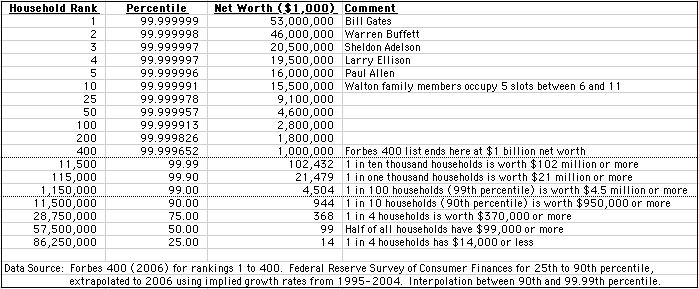
The plan itself is really a "no brainer," so much so that you'll probably feel as if you've previously heard much of what I am going to say. If you are fortunate enough already to have a net worth exceeding a million dollars, this discussion is not intended for you (though if you continue reading, you might run across some of the same thinking that got you to where you are today). On the other hand, if you are a member of the overwhelming majority--the 90% of all American households who are not yet millionaires--I encourage you to read on. (For a summary of the wealth distribution among American households, see this table in an earlier post here.)

From the outset, I emphasize that this is NOT a "get rich quick" scheme. It will not make you into a millionaire overnight. It will not allow you to retire tomorrow. It does notpromise spectacular 1000% and higher annual returns. It is not a magic formula for creating "something from nothing," implementing "no money down" methods, leveraging "other people's money" or deluding yourself into similar wishful thinking. Nor does it promise to turn you into the next Bill GatesWarren Buffett or Sheldon Adelson.

Instead, my recommended plan is a slower-paced, highly practical approach to growing wealthy in the most predictable manner possible. It offers an eminently feasible way to start from zero net worth and become a millionaire within the foreseeable future, within your own lifetime and conceivably even within the next 15 years (by the year 2022). I will explain how to take a measured approach to risk and sidestep the "poor house" in the process.

Here are the basic steps of the plan, just five in total:

  • Save at least $1,000 a month

  • Set realistic return expectations

  • Invest in equities

  • Minimize fees, expenses and taxes

  • Stay on course


I will cover the first point today and take up one additional point each week for the following four weeks.

Starting with a Savings "Seed"

"You gotta have money to make money," said a college classmate of mine, citing a rich uncle or other such role model. Having marched through school and a successful career over the past few decades, and now hovering post-career and pre-retirement, I have had the opportunity to see and experience first-hand how making money works in real life. Personally, I know many colleagues who have accumulated enough of a "nest egg" in a couple of decades of employment, enough so that they are now able to live off of their savings and investments, and no longer "need" to work (even though many choose to continue working).

Now, there are two sides to saving:

a) Income side: Working to earn money, and
b) Expense side: Exercising fiscal discipline by living within one's means.

Of course, as everyone knows, savings are the result of managing your personal finances so that your income exceeds your expenses.

I recall my later college years in graduate school in the 1980s when I worked as a teaching assistant earning about $5,000 a year (along with a tuition waiver), which allowed me to pay about $200 in monthly rent for a small room in a group house, cover food and miscellaneous expenses (books, an occasional movie, etc.), and still save over a thousand dollars a year. Upon graduation, when I took a job in New York City, my rent rose more than four-fold to $900 a month, but my salary more than compensated for the increase in my cost of living, enabling me to save a sizeable chunk of my earnings. Surely, both as a student and in the early part of my working career, I could have lived in more luxurious accommodations and pursued a more extravagant lifestyle, but I chose not to. Deliberately, I decided to live within my means, adjusting my lifestyle to make sure that I could save at least 10% to 20% of my income.

Just as acquiring wealth begins with fiscal discipline, which is really a mental and emotional balancing act between needs and wants, in many ways "being wealthy" is also a mindset. People who live paycheck-to-paycheck without saving any money are not wealthy, regardless of how much they earn. Conversely, people who are able to put aside a portion of what they earn, however modest their salary may be, either are "wealthy" (in the sense that they are able to buy more than they need, but choose not to spend all that they earn) or at least have a reasonable chance of one day becoming wealthy (as measured more traditionally by net worth).

One's first objective on the road to wealth, then, should be to start saving, which really means educating or training yourself to work a job that generates sufficient income to support your lifestyle and allows you to save a significant portion of each paycheck. Often, it can also boil down to focussing on the expense side by moderating your lifestyle so that at least 10% to 20% of your take-home pay accumulates in your bank account rather than disappearing as discretionary spending (ever consider that maybe you really don't need your jolt of caffiene from Starbucks today?).

Putting savings into a global context, it is interesting to compare the U.S. to other countries in terms of propensity to save. The bar graph below shows results of an ACNielsen survey polling respondents in various countries on how they use their "spare cash." As might be expected, given that the "average American" has a savings rate close to zero, the U.S. has a very low propensity to save. In the results of this survey, the U.S. ranks towards the bottom of the list way down in 33rd place among 38 nations. The countries with the highest propensity to save are all in Asia: India, Taiwan, Singapore, Indonesia, Philippines, Hong Kong, China, Malaysia, Thailand, Japan. Although now is not the time to go into specifics, my guess is that there is a fairly high correlation between savings rate and GDP. Suffice it to say that a regular savings plan is a good starting point for anyone who wishes to boost their "personal cumulative net GDP" (i.e., net worth).

(Click graph to enlarge)

For the purposes of our discussion, let's assume that any American seriously interested in building wealth is able to save $1,000 each month, for without this prerequisite savings "seed" it is truly difficult to build significant wealth. So, here I am not referring to someone working an unskilled labor job (e.g., flipping burgers at McDonald's full-time) and earning a minimum wage of $10 per hour, or $1,700 a month (about $20,000 a year), since admittedly living on just $500 a month after taxes (in order to save $1,000 a month) would be quite challenging. Our discussion does, however, encompass this same proverbial fast-food worker who has sufficient motivation and foresight to enter a local community college and begin training himself for an entry-level position paying $20 per hour, or $3,400 a month (about $41,000 a year). At this higher income level, saving $1,000 a month, or about one-third of one's take-home pay, becomes a very realistic proposition, since it is possible for individuals and even small families to live on $2,000 a month in most cities by being frugal consumers, i.e., choosing housing, food and transportation carefully and eliminating unnecessary expenses. For anyone completing a four-year college or obtaining a higher degree, earning more than $20 per hour becomes increasingly likely, making saving more than $1,000 a month not just possible but almost expected. . . .

For the moment, my advice on what to do with your $1,000 a month savings "seed" is literally to put it in the bank. Currently, with the yield curve "inverted" (i.e., short-term interest rates higher than long-term rates), many banks are offering savings accounts with very attractive interest rates of around 5% per annum. These accounts are FDIC-insured, offer full liquidity, have no effective minimum balance, and carry no monthly fees. A few examples I am familiar with are the online savings and free checking packages offered byCitibank and Washington Mutual, and a stand-alone savings account offered by E*TRADE Bank. Other banking alternatives are listed at Bankrate.com. You might also wish to check the ads in the business section of your local newspaper for any attractive offers.

Next week: Setting realistic expectations on investment performance

http://lloydsinvestment.blogspot.co.uk/2007/01/growing-wealth-from-zero-to-1-million.html

Thursday, 3 January 2013

Genius Ways to Make Extra Cash Fast!

1. Sell stuff on eBay. Clothes, exercise gear, books, housewares — anything you've got lying around that's in decent shape can be put up for sale on eBay or another Internet auction site such as craigslist.org. Post decent digital photos of your items so browsers can really see what you're pawning off; credibility is key to making a sale. Also, ask that the buyer pay the shipping charges, not you.

2. Become a dog-walker or pet-sitter. Rates for walking a single pooch at a time run from $10 to $15 per half-hour. If you critter-sit at a client's house while they're at work or on vacation, you can make even more dough. Post ads for yourself at veterinarian offices and the Humane Society, and put signs up at dog runs to spread the word.

3. Tutor struggling students. If you have strong writing or math skills (and the grades/résumé to prove it), check in with schools and learning centers and offer yourself up as a tutor. If you're a college student or recent grad living near a university, contact the academic department of the subject you excel in and see if they're looking for tutors. 

4. Sign up with a temp agency. Even in tough times, temp agencies still have openings for office work or retail help during evenings and weekends, so you can work a regular job yet take on the occasional shift elsewhere. Yeah, it's not the ideal way to spend a Saturday, but you can rack up at least a $100 for a day's work. 

5. Hold a mega-garage sale with friends. There's strength and money in numbers. Combining lots of items for a blow-out rummage or stoop sale will bring in more crowds (and cash) than if you sat in your driveway with just your own wares. 

6. Be a babysitter. Contact local churches and schools and advertise your kid-sitting services, using friends and family as references to vouch that you're a natural with kids (if you know CPR, make that known as well). It won't cramp your social life to spend a Friday night here or Sunday afternoon there minding some rug rats. Rates range from $10-$18 an hour, more if you take on a gig for parents in a pinch. 

7. Get crafty. If you make crafts of any kind (knitting, jewelry-making, pottery, T-shirt designs, for example) advertise your goods on the superpopular site etsy.com. Listing yourself and what you can make is cheap, and you're instantly connected to millions of shoppers worldwide looking to buy original, eclectic gear. 

8. Personal shop for male friends and coworkers. If you love to shop and earn kudos for picking out great gifts for people, offer to hit the malls or go through catalogues and help pick out presents for the girlfriends, mothers, and wives of shopping-averse guys. They'll be grateful for the time you save them, and they'll have more trust in your instincts that the gift ideas you come up with will win raves. Consider charging 10-20 percent of the cost of whatever you're shopping for, plus gas if you have to hit the road to get it. 

9. Sign on with a catering company. Caterers have huge turnover and always need to recruit new reliable, presentable employees to work weekend weddings and parties as waiters, bartenders, and hostesses. You'll earn about $12 an hour. 

10. Take on seasonal work. Even when the economy sucks, business still goes up (though not as high as in banner years) for companies and stores during the December holidays. They may not be hiring as many people as when the economy was in top shape, but it can't hurt to stop by your local mall and look into gift-wrapping and retail sales opportunities. Valentine's Day, Easter, and Mother's Day are also busy times for service and retail companies, and they're prime time to reach out to neighborhood florists, who always need delivery help then. 

And here are a few ways NOT to stretch your extra money: 

1. Break your birth-control pills in half.
2. Put your rottweiler on a diet.
3. Get laser hair removal for half off at a salon training night.
4. Give your "gently used" toilet paper another go.
5. Skip the liquor store and come up with new cocktail ideas involving mouthwash and vanilla extract.
6. Take advantage of the low fares offered by What's That Noise? Airline

http://www.cosmopolitan.com/advice/work-money/Genius-ways-to-make-extra-cash-fast

Wednesday, 2 January 2013

The Missing Secret: Ensure Your Personal / Financial Goals Propel You ...

The Missing Secret: Ensure Your Personal / Financial Goals Propel You ...:


Showing gratitude is the first step towards attracting positivity from the world around you.  Reaching your goals starts with a single positive thought and its only you who can attract that thought towards you by being grateful to the good things and good people around you.

How do you feel when someone sincerely expresses his or her gratitude to you for something you did? Doesn't it make you feel good about yourself? These positive feelings can lift you up, boost your enthusiasm, and motivate you to achieve even more Feeling grateful for what you have will not only sustain your drive toward your goals but will also help attract more of the thing that you are grateful for towards you.

That is how gratitude has some seriously positive snowball effects in your life.
Being grateful to what you have can be beneficial in many ways some of which are listed below:


1. Goal attainment - When you feel grateful, it tends to be a lasting and selfless feeling. It's much more than just a momentary burst of positive energy; it has staying power that will provide a great boost for you to reach your goals.


* When you express your gratitude to others, ensure that you're open and expressive. It is not just the thought but the expression of thought matters as well.

2. Relationship booster - There are many ways you can express your gratitude to your loved ones, including saying, "Thank you," writing a letter, or giving them a thoughtful gift. When you learn to avoid taking your loved ones for granted, you'll have a long lasting and loving relationship.


* Showing gratitude is a two way street. The more you give the more you receive!


3. Effective communication: Gratitude can mean better communication all around. By expressing your gratitude to strangers, they'll be more likely to show an interest in helping you, too.


* Gratitude is such a powerful entity that it can even help you communicate with your pets, in this case maybe not through talking but through your gestures.


4. Effective constructive criticism. No matter how we express constructive criticism, it often makes the recipient defensive or even angry. No one likes a blow to the ego. In this situation, a grateful attitude can take you a long way. You can express criticism quite effectively when you also emphasize what you appreciate about them.

5. Happy memories - You can preserve memories in a positive way when you keep a gratitude journal. When you go through your memories again and again it will bring more happy times in the future. 

Tuesday, 1 January 2013

Visualize Your Way to Success (Really!)


You may think about being successful all of the time, but your brain may have a different idea. Here's how to bridge that gap.

Advertisers spend millions of dollars to motivate us into purchasing things that we probably don't even need.
Think about automobile commercials. In them, you virtually experience the speed, smell, and luxury associated with owning the car of your dreams. This kinesthetic experience may be very real, even pleasurable, for the 30-second duration of the commercial. But if you continue to think about owning that pricey vehicle it will create something in your brain called cognitive dissonance. This is the feeling of discomfort that results from holding two conflicting beliefs; the belief that you really want and deserve that car and the belief that you simply can't afford it.
You experience a similar tug of war all of the time: You work tirelessly, for long hours, hustling for a dream you are not yet living.
What many people don't realize is that we have the power to program our subconscious minds to assist us in getting what we want. It may seem too simple; for some it may seem too "out there," but the act of visualizing your dreams can make them more achievable.
Why is visualization so powerful? As you see and feel images that portray your desired outcome, the cognitive dissonance in your brain increases. But this is a good thing. The increased discomfort sends a message to your brain that you are not giving up on this goal. The brain wants to create balance so it will change directions to figure out ways to make your success happen.
As we routinely and intentionally visualize a desired outcome, and step into the belief that it is possible, our brains increase the motivation to make it happen. We become more and more determined to do whatever it takes to achieve our goals.

In addition to increased motivation, you will begin to get creative ideas that will help you to achieve your goal. You may wake up at 3 a.m. with a brilliant thought, or experience a download of pure genius while in the shower. This is because visualization prompts the brain to "wake up" to messages and resources that it previously shut out. Now that it's well aware of your goal it assists you in becoming more aware and open to finding the answers.

At the beginning of his career Jack Canfield, best-selling author and one of our earliest champions of peak-performance, had never earned more than $8,000 in a year. When he began daily visualization, focused on the goal of earning $100,000 in a year, ideas began to surface after only 30 days. These ideas were always available to him but had never occurred to him before. When he began to program his mind through visualization, his brain found the solutions to his $100,000 problem. Canfield achieved this goal in less than one year and has continued to increase his income, happiness, and success over the years. He even created a hugely successful career in teaching and inspiring others to do the same.

"Your brain wants to solve your problems," says Canfield.  "When you are 'stuck' it simply means that your mind isn't open to the solutions.  Visualization releases this resistance and allows the brain to do its job and make you happy."
So what have you got to lose? Use these simple steps to incorporate visualization into your daily routine for 30-60 days and see what happens!
Decide exactly what you want.
Your goal must be very clear and specific. Let's say that you want to increase profits by 30%. Don't get caught up in the "how and why," those will come to you. Simply get very clear on your goal and make it believable, yet just out of reach. As you become an expert at visualization you will naturally set your sights higher.

Choose an image.
Choose at least one image to hold in your mind's eye as you go through your daily visualization process. How will it feel to increase profits by 30%? How will you know that you have succeeded? Capture a visual of your celebration or of taking that vacation that you've put off for five years.
Visualize daily.

After you become skilled at visualization you will be able to do it anywhere, but in the beginning a quiet space is a must.  Make yourself comfortable and focus on your breathing. Relax. Now see that image of success and allow your mind to wander with the image. See yourself on that vacation. Imagine taking those checks to the bank. Step into the feeling and power of this image; make it very real. It's important to hold this heightened feeling for at least 20 seconds, but 10-15 minutes is ideal.

Be consistent and don't give up. And then come tell us about how you made your dream became reality!

http://www.inc.com/marla-tabaka/visualization-can-help-you-succeed.html